
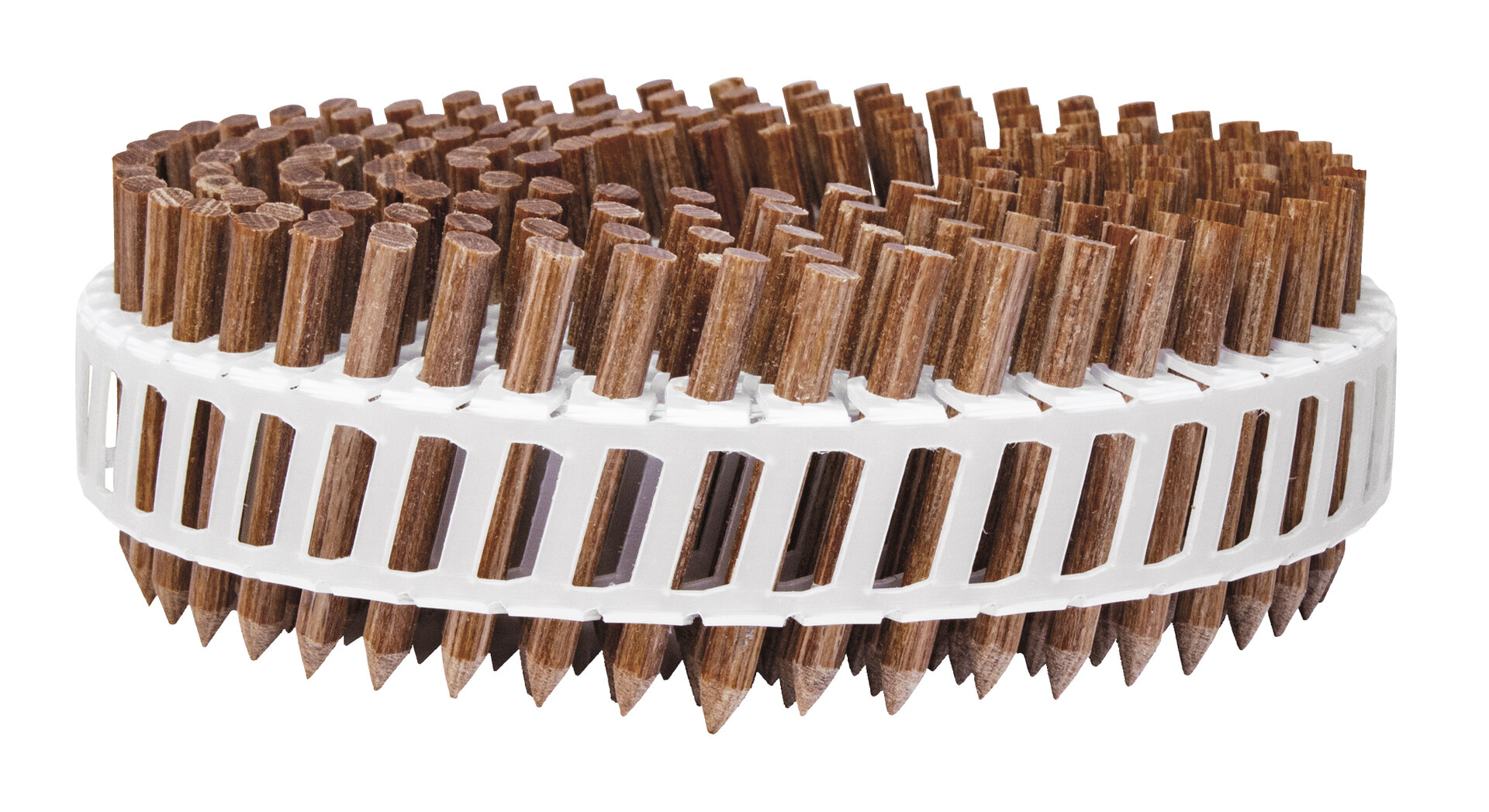



LIGNOLOC® Wooden Nails 3.7 | 38 - 60 mm
LIGNOLOC® is the first collated wooden nail designed for pneumatic installation. It enables metal-free, circular fastening of wood and is suitable for efficient production processes in timber construction and woodworking. Typical applications include cross-laminated timber and solid timber wall systems, timber frame construction and solid timber applications, decorative interior wood cladding, natural wood furniture, sauna construction, the fastening of reclaimed timber, and pre-fixing of bonded timber components. Made from highly compressed beech wood, LIGNOLOC® nails prevent thermal bridging, resist corrosion, and can be sawn, milled, or sanded without damaging cutting tools.
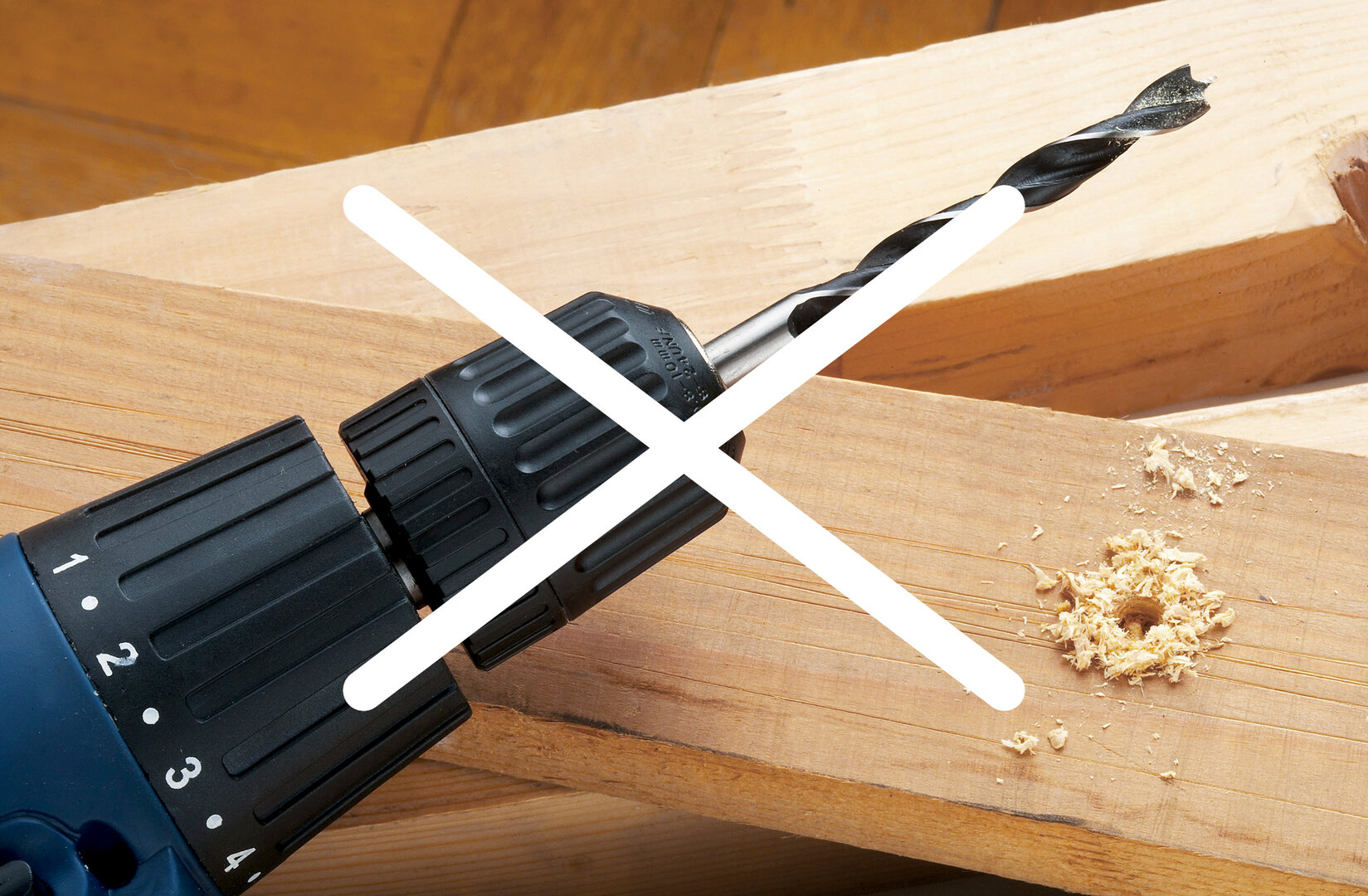
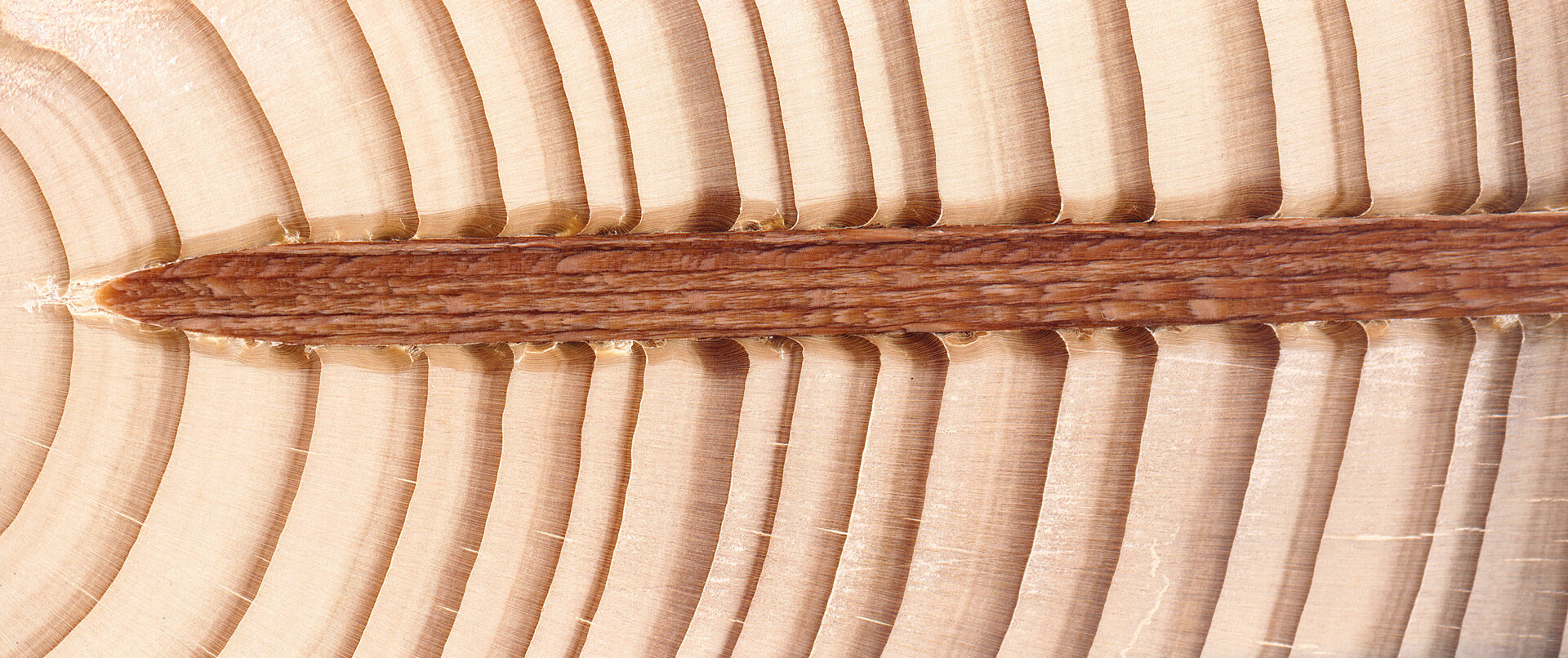
The low thermal conductivity of LIGNOLOC® wooden nails reduces thermal bridging in timber and supports material-compatible construction.
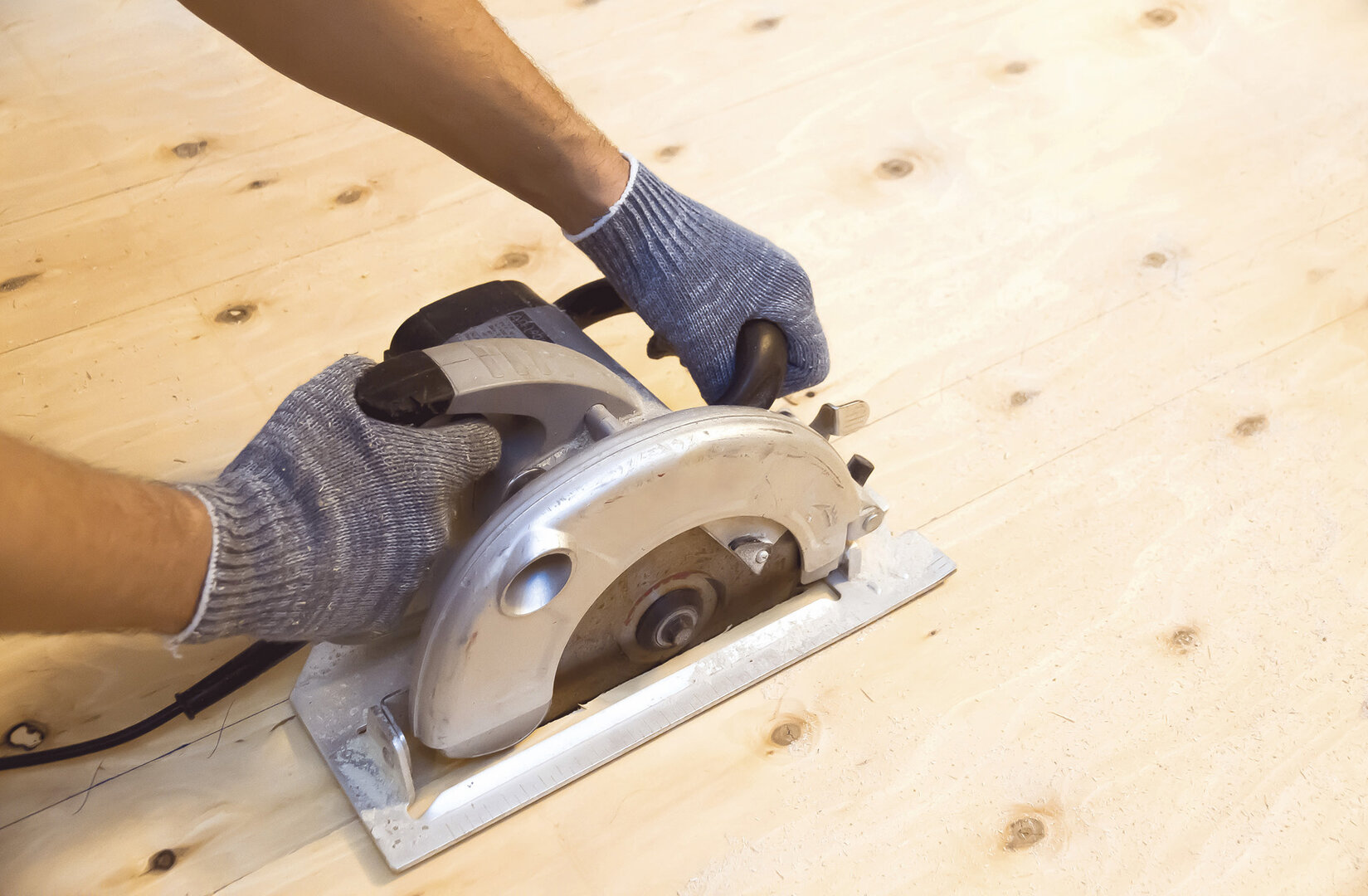
LIGNOLOC® wooden nails can be sawn, milled and sanded during subsequent processing without excessive tool wear.
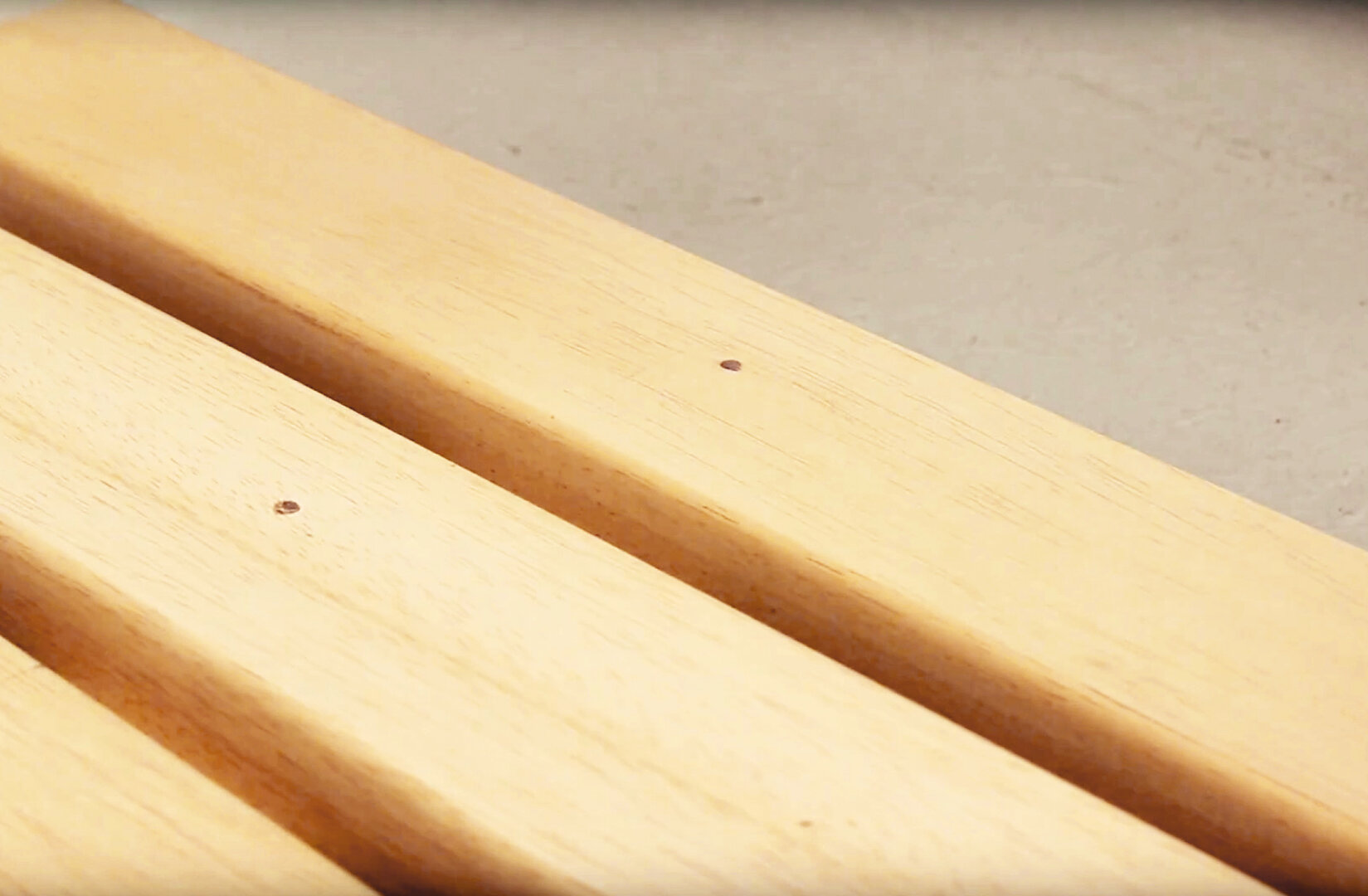
LIGNOLOC® wooden nails are resistant to corrosion and chemicals, making them suitable for demanding applications.

Product variants

Technical data
Applications


Standards and test marks
Downloads
FAQs
LIGNOLOC® wooden nails with a diameter of 3.7 mm are available in the following lengths:
38 mm
50 mm
55 mm
60 mm
All variants are supplied in plastic coils with a magazine capacity of 170 wooden nails.
The 3.7 mm diameter is suitable when a slim fastener cross-section and a headless fixing are required. Typical applications include interior wood cladding, furniture production and pre-fixing. The appropriate nail length depends on the component thickness, wood species, load and required penetration depth.
LIGNOLOC® wooden nails without head create a particularly discreet fixing point and are suitable for applications such as interior cladding, furniture production and pre-fixing. LIGNOLOC® wooden nails with head have a larger bearing surface and were developed in particular for visible fixing of façade boards and comparable components.
Yes. Headless LIGNOLOC® wooden nails are suitable for the rapid pre-fixing of timber components before or during gluing. The components are held in position without metal fasteners remaining in the timber. During subsequent machining, there is therefore no risk of hitting concealed metal parts.
The fixing point generally remains visible, but the slim diameter and absence of a head make it considerably more discreet than a nail with head. This makes the 3.7 mm version particularly suitable for timber surfaces where a subtle fixing appearance is required.
The appropriate nail length depends on the thickness of the component being fixed and the required penetration into the supporting timber. The wood species, density, edge distances, load and structural design must also be taken into account.
When a LIGNOLOC® wooden nail is driven in with a pneumatic FASCO® nailer, the strong friction generates heat at the tip of the nail. This activates the natural lignin in the wooden nail and creates a material-bonded connection between the nail and the surrounding wood fibres. This effect is known as lignin adhesion. The resulting connection values of LIGNOLOC® wooden nails are documented in the European Technical Assessments ETA-23/0041 for headless LIGNOLOC® wooden nails and ETA-23/0330 for LIGNOLOC® wooden nails with a head. These values can be used for the design of timber-to-timber connections and provide planners and timber construction companies with a reliable basis for professional timber projects.
Yes. Timber components fastened with LIGNOLOC® can subsequently be sawn, milled, planed, sanded or otherwise mechanically processed. As there are no concealed metal parts in the timber, the risk of damaging tools during subsequent processing is significantly reduced.
LIGNOLOC® wooden nails react to moisture in a similar way to the surrounding timber. As they are made entirely of wood, they do not cause corrosion-related discolouration due to rust. For permanently exposed timber connections, the rules of structural timber protection must nevertheless be observed in accordance with the intended conditions of use.
LIGNOLOC® enables single-material, metal-free timber connections. This makes timber components easier to process, reuse, recycle or recover for energy at the end of their service life. At the same time, no metal-related thermal bridges are created and no concealed metal parts make subsequent processing more difficult.


